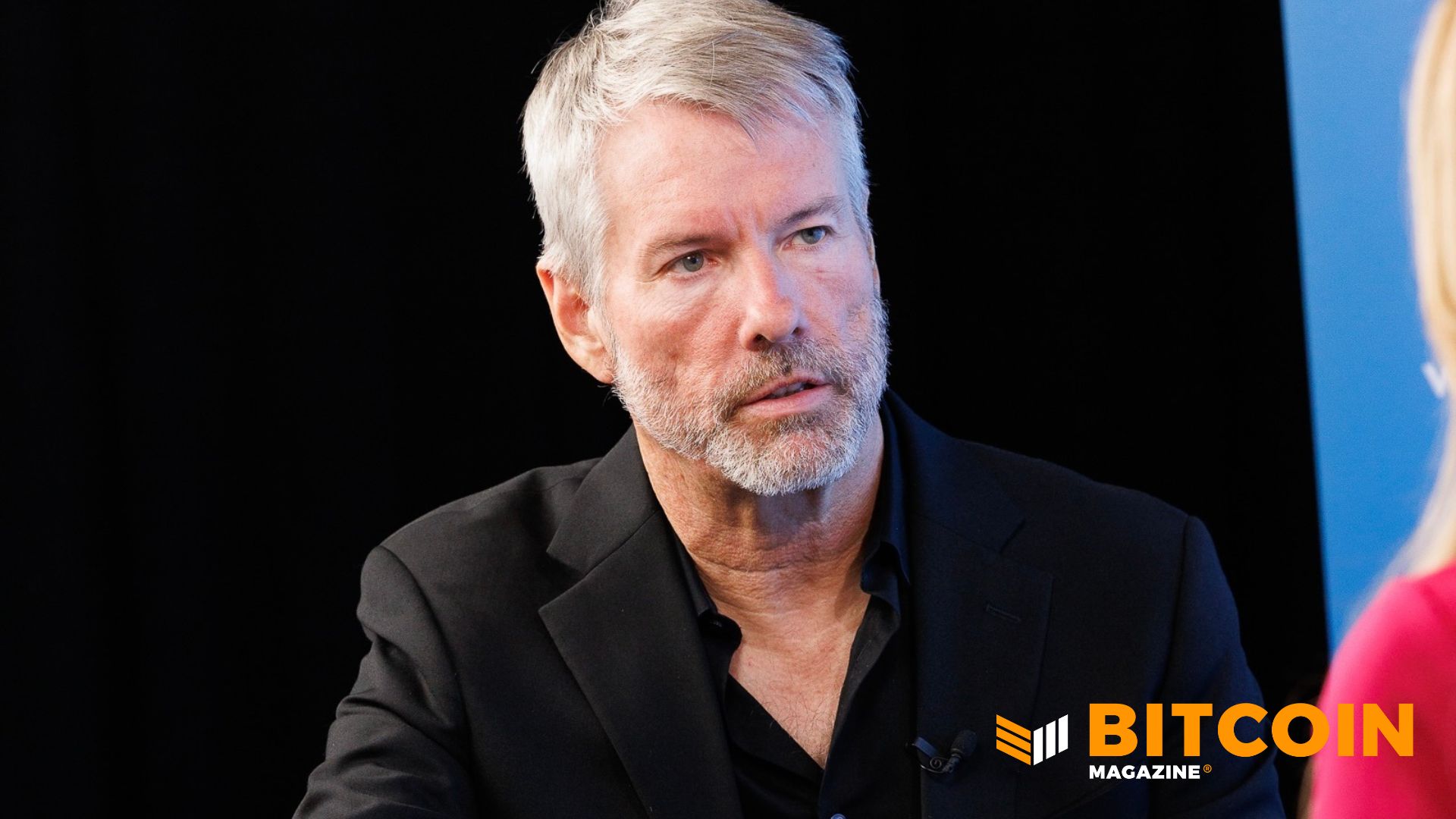
Michael Saylor
American entrepreneur and business executive (born 1965)
About Michael Saylor
Michael Jerry Saylor is an American entrepreneur and billionaire business executive. He is the executive chairman and co-founder of Strategy Inc., formerly known as MicroStrategy, a company that provides business intelligence, mobile software, and cloud-based services.
Michael Saylor spent two decades as the CEO of a mid-cap business-intelligence software company almost nobody outside enterprise IT had heard of. Then in August 2020 he converted MicroStrategy's treasury into Bitcoin, and within two years he had reinvented himself as the most aggressive, most vocal, and most leveraged corporate Bitcoin advocate in the world.
Origins
Saylor was born in Lincoln, Nebraska, in 1965 and grew up on Air Force bases around the world. He attended MIT on an Air Force ROTC scholarship, studying aeronautics and the history of science. Discharged for medical reasons before active duty, he co-founded MicroStrategy in 1989 with a college friend, selling data-analytics software to large enterprises. The company went public in 1998 and rode the dot-com bubble to a peak market cap over $20 billion.
The SEC settlement
In 2000, the SEC charged Saylor and two MicroStrategy executives with accounting fraud, alleging they had overstated revenue for two years. Saylor settled without admitting wrongdoing, paying $8.3 million personally and restating the company's financials. The stock lost most of its value within days. For the next twenty years, Saylor ran a quieter, cash-generative version of MicroStrategy — profitable, but ignored by growth investors.
The Bitcoin pivot
In mid-2020, facing a low-yield environment, a weakening dollar narrative, and hundreds of millions of dollars of idle corporate cash, Saylor concluded that holding Treasuries was a slow liquidation. In August 2020 MicroStrategy announced its first Bitcoin purchase: 21,454 BTC for $250 million. Within months the company had added debt-financed purchases. By 2024 MicroStrategy owned more than 200,000 BTC; by 2026, after a series of at-the-market equity raises and convertible-note offerings executed under the renamed "Strategy" corporate brand, the holding exceeds 500,000 BTC and the company functions for many investors as a leveraged Bitcoin proxy.
The playbook
Saylor's strategy has been essentially one trade repeated at scale: issue convertible debt or equity at a premium to the underlying Bitcoin value, use the proceeds to buy Bitcoin, and rely on the thesis that Bitcoin's long-run compound growth outpaces the cost of capital. Critics call it a reflexive bubble that works only while the stock trades above net asset value. Saylor calls it a "Bitcoin yield" strategy and publishes a bespoke metric called "BTC per share" to track it.
He paired the buying with a relentless communications campaign. He gave hundreds of podcast interviews, hosted the "Bitcoin for Corporations" conference annually, and produced long monologues about Bitcoin as thermodynamically sound money, digital property, and a hedge against monetary debasement. His rhetorical style — equal parts Austrian economics, physics analogies, and founder bravado — converted a generation of CFOs and made him the single most-quoted executive in Bitcoin.
Controversies
In 2022, Washington, D.C.'s attorney general sued Saylor personally, alleging he had evaded more than $25 million in D.C. income taxes by claiming Florida residency while living in D.C. Saylor settled in 2024 for $40 million without admitting wrongdoing, the largest income-tax recovery in D.C. history. Critics also argue that MicroStrategy's capital structure concentrates systemic risk: a sustained Bitcoin drawdown combined with convertible debt maturities could force liquidations at exactly the wrong moment. Saylor counters that the debt is long-dated, mostly unsecured against the Bitcoin holdings, and structured to survive a 70 percent drawdown.
Where he stands in 2026
In 2026, Saylor is executive chairman rather than CEO, focused almost entirely on Bitcoin strategy and public advocacy. MicroStrategy — now Strategy — is among the largest holders of Bitcoin on the planet, rivaled only by BlackRock's IBIT ETF and a handful of sovereign reserves. Dozens of other public companies, following Saylor's template, have added Bitcoin to their treasuries, and the phrase "Bitcoin Treasury Company" has become a category.
The unresolved questions around Saylor are structural. Is a company whose primary asset is a single volatile commodity really a going concern, or a perpetual leveraged bet? Will the conversion of Bitcoin into collateral for ever-larger equity raises eventually reach a ceiling? And what happens to Strategy's valuation premium in a sustained bear market? Saylor himself appears entirely untroubled by those questions. He has said repeatedly that he would never sell, that he expects Bitcoin to reach prices currently considered absurd, and that his job is to accumulate and hold on behalf of shareholders. Whether that conviction represents insight or recklessness is the question that will define his legacy.