
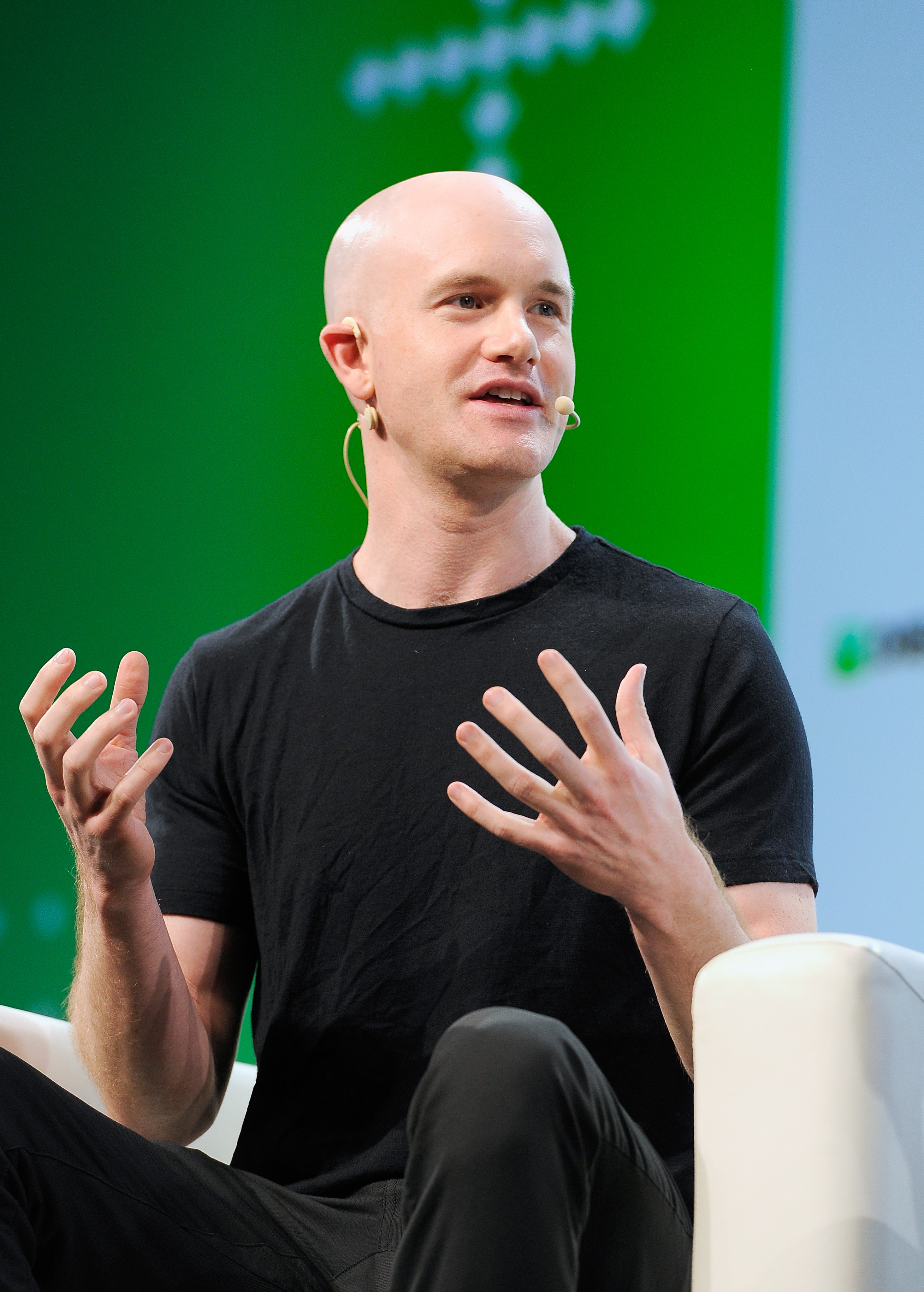
Brian Armstrong
American businessman (born 1983)
About Brian Armstrong
Brian Armstrong is an American businessman and investor who is CEO of cryptocurrency platform Coinbase, which he co-founded with Fred Ehrsam. He received media attention for his policy of keeping the workplace free of political activism. He is also co-founder of NewLimit, an anti-aging startup.
Brian Armstrong runs the largest publicly traded cryptocurrency exchange in the United States and has spent the better part of a decade trying to convince Washington that his industry deserves to exist. His career is a study in patience: relentlessly boring in his public persona, relentlessly aggressive in his regulatory and product strategy.
Origins
Armstrong grew up in San Jose, California, studied economics and computer science at Rice University, and briefly lived in Buenos Aires during Argentina's monetary chaos of the late 2000s — an experience he has repeatedly cited as formative in his thinking about monetary systems. After short stints at IBM, Deloitte, and Airbnb, he co-founded Coinbase with Fred Ehrsam in 2012, building the company out of Y Combinator's summer batch.
Building a compliant on-ramp
From the start, Coinbase's core bet was different from most of early crypto: rather than treating regulation as an adversary, Armstrong treated compliance as a moat. The company registered money-transmitter licenses state by state, hired former regulators as executives, and refused to list assets that looked like unregistered securities, a conservatism that frustrated crypto-native users for years but positioned Coinbase as the default exchange for U.S. retail investors and institutional desks. That positioning paid off in April 2021, when Coinbase went public via direct listing, briefly valued at $85 billion.
The Armstrong style
Armstrong is an unusual Silicon Valley CEO: introverted, uninterested in the conference circuit, and famously blunt about internal policies. In 2020 he published an essay declaring that Coinbase would be a "mission-focused" company, explicitly discouraging employee activism on workplace Slack. Roughly five percent of staff took a buyout and left; the policy became a template other tech CEOs imitated. He has mostly avoided the performative provocations of other crypto executives, preferring long-form essays about industry strategy, U.S. competitiveness, and the need for "economic freedom."
Regulation, lawsuits, and the SEC fight
The central story of Armstrong's tenure is his confrontation with the U.S. Securities and Exchange Commission. Under former chair Gary Gensler, the SEC argued that many tokens listed on Coinbase were unregistered securities and sued the company in 2023. Armstrong fought the case publicly, arguing that the SEC had refused to provide a workable registration path, and Coinbase emerged largely vindicated when courts narrowed the agency's jurisdiction. The case became a defining moment for U.S. crypto policy and for Coinbase's brand as the industry's legal standard-bearer. Under a more crypto-friendly regulatory environment from 2025 onward, Coinbase has expanded into derivatives, institutional custody, and the Base layer-2 rollup, which by 2026 is one of the most-used Ethereum L2s.
Base and the L2 strategy
Base, launched in 2023, represents a strategic bet that Armstrong made about where exchange revenue would come from in the next cycle. Rather than fight Ethereum's move toward rollups, Coinbase built its own — built on Optimism's OP Stack, deeply integrated with the Coinbase app, and aimed at embedding crypto into mainstream consumer experiences. Base's success has made Coinbase one of the most significant infrastructure providers in the Ethereum ecosystem, not just a venue for buying and selling.
Controversies
Coinbase under Armstrong has faced criticism on multiple fronts. Customer-support failures during the 2021 bull run left thousands of users locked out of accounts. The company's aggressive political spending through the Fairshake PAC has drawn accusations that it is trying to buy favorable regulation. Critics on the left argue that Coinbase's listings have at times included assets with clear securities features. Critics inside crypto argue that the company's compliance-first stance slows U.S. innovation relative to offshore venues. Armstrong himself has been accused of aligning too closely with particular political figures, though his stated stance has been single-issue: whoever supports crypto policy.
Where he stands in 2026
In 2026, Armstrong is among the longest-serving CEOs in a sector that routinely destroys founders, and Coinbase is one of the few original crypto companies still operating at scale under its founder's leadership. The company has diversified far beyond spot trading into staking services, stablecoin partnerships with Circle, institutional custody, developer tooling, and Base. Its financials are healthy, its political position inside the U.S. has moved from defensive to offensive, and its valuation has recovered from the 2022 lows.
The unresolved questions around Armstrong are about ambition versus focus. Coinbase's strategic surface area is now enormous: it is simultaneously an exchange, a stablecoin partner, a custodian, an L2 operator, a political lobbyist, and a consumer wallet. Whether that breadth produces a durable franchise or gets trimmed back by future competition — from traditional brokerages, from payment networks, from Binance's U.S.-regulated successors — will define the second decade of Armstrong's tenure.
Related coverage
CryptolutNo coverage yet.