
Stablecoins Are Now the Product. Everything Else Is Distribution.
Tether is the most profitable company per employee in modern financial history. Circle is a quiet infrastructure monopoly. The rest of crypto is, increasingly, a distribution channel for their balances.

Tether's 2025 profits, disclosed in the firm's Q1 attestation package, were approximately $14.1 billion on 162 employees. That is a per-employee profit figure of $87 million, which is — as far as anyone can find — the highest in the recorded history of financial services. Circle is less transparent about its internal economics but is, by any reasonable estimate, also extraordinarily profitable on a per-employee basis. The stablecoin issuers are not a sector of the crypto industry. They are the industry's most profitable business model, by a margin that is probably widening.
The rest of crypto is the distribution channel
Here is the stark framing that I increasingly think is correct. Exchanges, wallets, on-ramps, DeFi protocols, L1 blockchains — these are all, from Tether's and Circle's perspective, distribution infrastructure for their balance sheets. The more places USDT and USDC are accepted, the more balances the issuers hold, and the more T-bill interest they capture.
Crypto's infrastructure investments over the last decade have, in large part, been subsidized by VC capital into an ecosystem whose dominant rent-extracting position is now held by two companies that did not build any of that infrastructure and do not materially share the economics with the builders.
"The stablecoin business model is the most important invention in crypto, full stop. It's also been quietly extracting value from everyone else in the stack." — Raoul Pal, in a Real Vision episode last month
Why this was not obvious earlier
When Tether launched in 2014, the business model was invisible, partly because interest rates were near zero and partly because Tether was small. The fee-free peg was sustainable as a loss leader, because the loss was modest. As interest rates rose and Tether's balances grew, the combination produced a business whose marginal profitability exceeded the combined profitability of many other crypto businesses put together.
The analogous moment in traditional finance is the money market fund industry in the early 1980s, when high short-term rates turned the sweep balances of retail brokerage customers into a multi-billion-dollar business. The crypto equivalent has happened at 100x the pace and with less public attention.
What the non-issuers should be doing
The exchanges, wallets, and L1s that serve as the distribution layer for stablecoins are, collectively, in a difficult negotiating position. They provide the distribution. They capture a fraction of the economics. The share they capture is a function of their substitutability — an exchange that can be swapped for another exchange has less leverage; a wallet that is one of many wallets has less leverage.
The firms that will do best in this arrangement are the ones that can credibly threaten to issue their own stablecoins, or to materially shift their users' balances to a competing issuer. Coinbase's USDC relationship — with revenue share — is the template. The L1s have generally not been able to negotiate this kind of arrangement, because Tether and Circle can threaten to redeploy to a different L1 faster than an L1 can threaten to lose them.
What regulators are about to notice
The next phase of the stablecoin story is almost certainly regulatory. The U.S. Treasury has, for at least the last year, been increasingly attentive to the fact that Tether and Circle are collectively among the largest holders of short-dated U.S. Treasury securities. That holding concentration has both monetary policy implications and systemic risk implications. The political difficulty of regulating two firms that are, by most reasonable measures, dollar-positive for U.S. geopolitical interests is what has slowed the regulatory response. It will not slow it forever.
Whatever comes next — a full federal stablecoin charter, a carve-out within bank regulation, or something more creative — will probably further entrench the existing issuers rather than displace them. Distribution networks, once they reach sufficient scale, tend to survive regulatory overhauls. The rest of crypto, whose economics are subordinated to those networks, will have to make its peace with that arrangement. Most of the ecosystem has not yet grasped that it needs to.
Related stories

AI researcher claims he's already bypassed Anthropic's Fable 5 guardrails
An AI researcher claims to have bypassed Anthropic's Fable 5 guardrails within 48 hours of launch, raising concerns about AI safety and potential implications for cryptocurrency security.
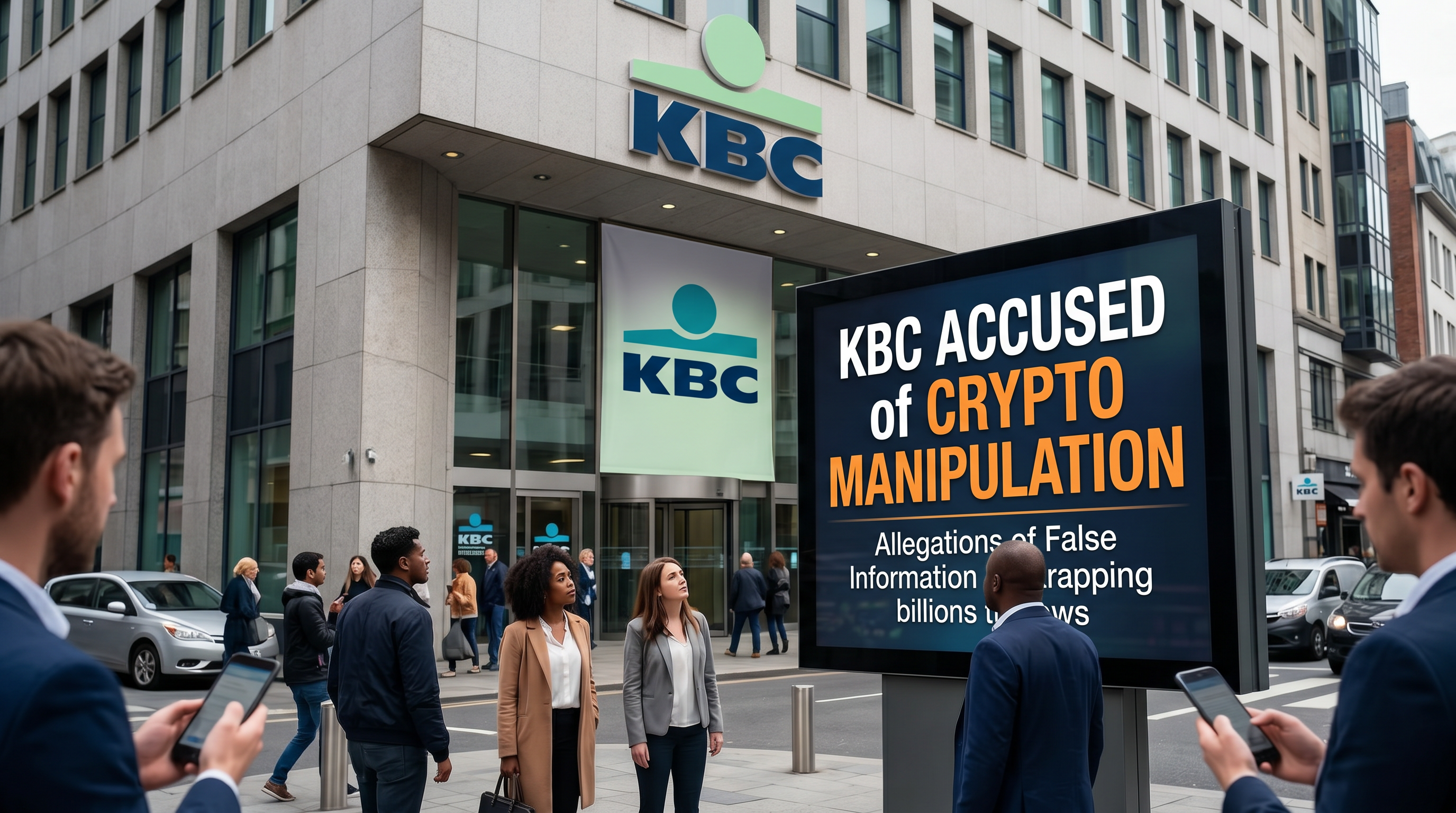
Belgian Banking Giant KBC Accused of Manipulation as Crypto Platforms Prepare Legal Action
Major cryptocurrency exchanges are preparing lawsuits against KBC Bank over allegations of disseminating false information to customers, effectively trapping billions in traditional banking products. As the legal battle intensifies, questions emerge about whether Belgian banks are prioritizing their own commercial interests over customer financial freedom.

Q-Bit – The Quantum Leap Your Portfolio Has Been Waiting For
Stop buying machines. Start owning the future. Q-Bit unlocks quantum computing power for research, logistics, and data protection—without the hardware headache. Here’s why early adopters are already calling it the next paradigm shift.