
The Quiet Case for Bitcoin Privacy, Before It's Too Late
Chain analysis has become good enough that every meaningful Bitcoin address is one subpoena from full disclosure. The window to build opt-in privacy tools is closing.

Chainalysis now maintains enriched identity attribution for approximately 73% of Bitcoin addresses that have transacted with any regulated on-ramp in the last five years. That figure — which Chainalysis itself has not confirmed publicly but which several law enforcement contacts have cited consistently — is the background against which every argument about Bitcoin privacy now takes place. The question is not whether Bitcoin is pseudonymous; it is whether it will have any functional privacy at all a decade from now.
What we built without noticing
The on-chain transparency that Bitcoin maximalists once celebrated as a feature — the auditability of the supply, the verifiability of reserves, the inability to hide inflation — turned out to be a double-edged thing. The same properties that allow us to audit miner concentration also allow third parties to audit individual users.
In the early years, this did not matter practically, because the tooling to de-anonymize at scale did not exist. It exists now. It is sophisticated, well-funded, and continuously improving.
"The thing Bitcoiners did not anticipate is that 'transparent' and 'private' would turn out to be load-bearing in opposite directions over time." — Jameson Lopp, in a recent presentation
What opt-in privacy would look like
Opt-in privacy is not the same thing as the protocol-level privacy that Monero and Zcash have implemented. Opt-in privacy means that users who specifically want to obscure their transaction history have tools that can accomplish it within the existing Bitcoin protocol or with minimal soft-fork changes. The candidates include:
- CoinJoin implementations that have survived regulatory attention (the legal pressure on Samourai and Wasabi has thinned the field)
- Silent payments, which provide address-level unlinkability without protocol changes
- Lightning Network usage, which moves transactions off-chain for routine payments
- The long-discussed but never-implemented Taproot-based coinjoin designs
Each of these has technical and political problems. None of them are unsolvable. All of them require resources — developer time, legal cover, user education — that the Bitcoin ecosystem has not been directing toward privacy with any seriousness in the last three years.
The regulatory argument against privacy is louder than it deserves to be
There is a standard argument that opt-in privacy tools will be immediately and completely banned, and that building them is therefore pointless. This argument has been disproved, repeatedly, by the history of encryption generally. It took decades, but end-to-end encrypted messaging is now ubiquitous. Hard-disk encryption is standard. PGP exists. The regulatory pressure against each of these was substantial at various points. They exist anyway.
Bitcoin privacy tools will face legal pressure. Some will be shut down. Some will relocate. Some will persist. The question is not whether opt-in privacy can be suppressed — it mostly cannot, if enough people want it — but whether it can be built to a standard that makes it usable by people who are not already privacy specialists.
The closing window
The reason this matters now, and not in five years, is that chain analysis improves monotonically. Historical transactions become more attributable over time as more identity information accumulates in the attribution databases. A transaction that is unlinkable today is not necessarily unlinkable in 2030. The window to establish norms, build tools, and set the legal precedents that will govern opt-in privacy is shorter than most people think.
What the maximalists should be doing
The Bitcoin maximalist community has, generally, been lukewarm on privacy work. The reasons are partly cultural — the community's self-image as auditable and transparent — and partly strategic, in that the largest Bitcoin holders appear to believe that the regulatory environment for Bitcoin-as-asset is friendlier than the regulatory environment for Bitcoin-as-payment-with-privacy.
That calculation may be correct for the next two years. It is not correct on any longer horizon. A Bitcoin that has no functional privacy — that cannot be used to transact without disclosure — is a Bitcoin whose utility is narrower than its advocates have claimed, and whose long-term adoption ceiling is lower than its current trajectory implies. The quiet case for Bitcoin privacy is not an ideological one. It is a long-run commercial one. And the window is, genuinely, closing.
Related stories
AI researcher claims he's already bypassed Anthropic's Fable 5 guardrails
An AI researcher claims to have bypassed Anthropic's Fable 5 guardrails within 48 hours of launch, raising concerns about AI safety and potential implications for cryptocurrency security.
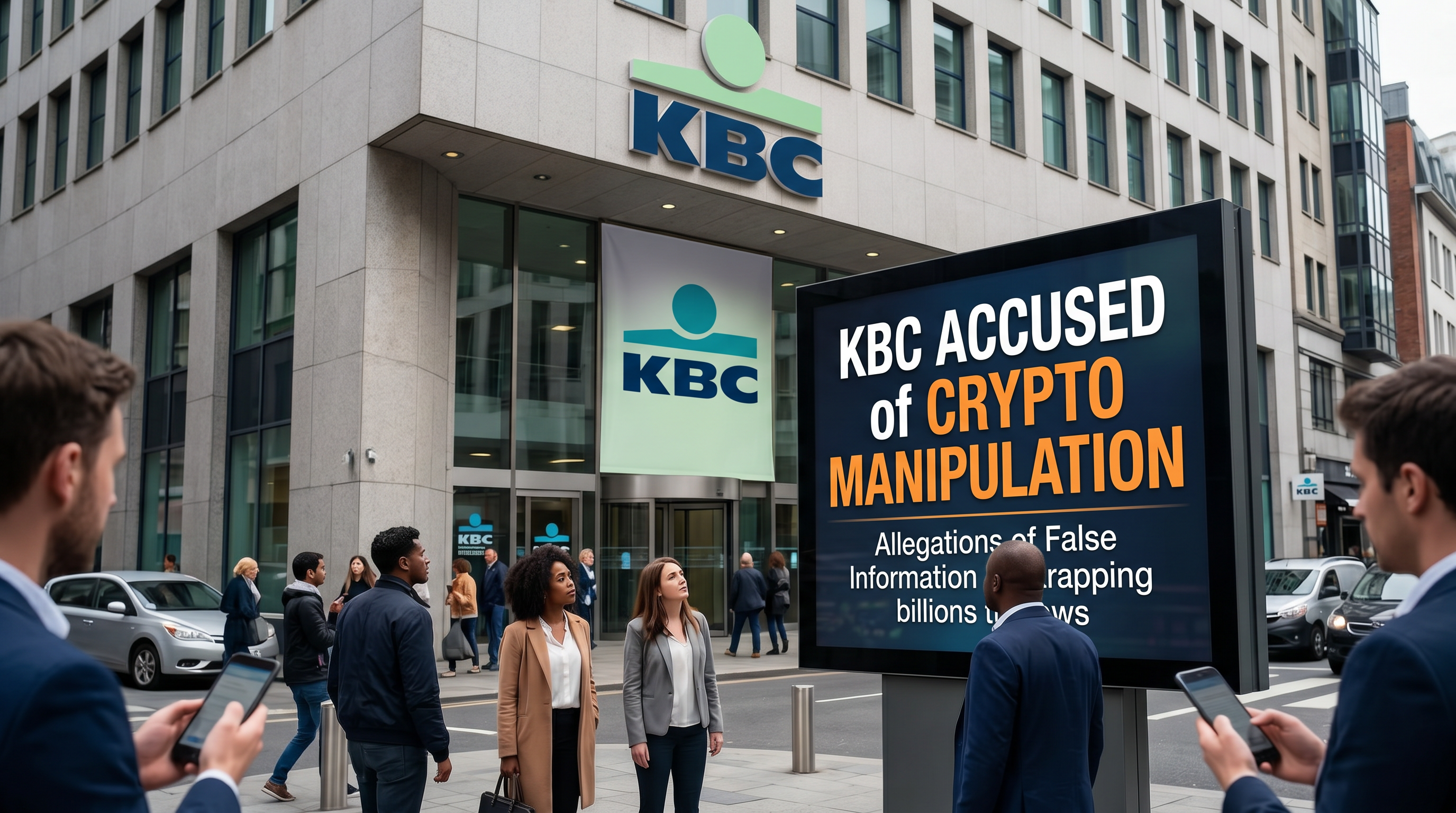
Belgian Banking Giant KBC Accused of Manipulation as Crypto Platforms Prepare Legal Action
Major cryptocurrency exchanges are preparing lawsuits against KBC Bank over allegations of disseminating false information to customers, effectively trapping billions in traditional banking products. As the legal battle intensifies, questions emerge about whether Belgian banks are prioritizing their own commercial interests over customer financial freedom.

Q-Bit – The Quantum Leap Your Portfolio Has Been Waiting For
Stop buying machines. Start owning the future. Q-Bit unlocks quantum computing power for research, logistics, and data protection—without the hardware headache. Here’s why early adopters are already calling it the next paradigm shift.